
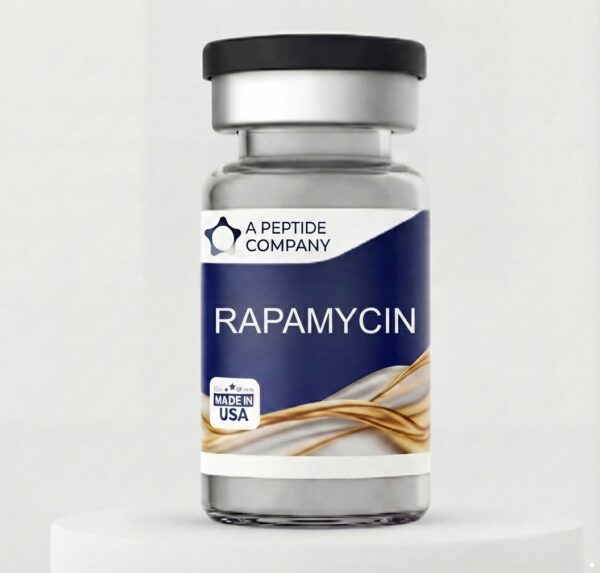
Description
Traditionally Rapamycin was used as a type of anti fungal antibiotic produced by steptomyces hygroscopicus. Currently it is being used in the prevention of transplant rejection because of its immunosuppressive effect. The immunosuppressive effect of Rapamycin is exerted by inhibiting the activation and proliferation of T cells. Rapamycin binds to FK-binding protein 12 (FKBP12) and forms the Rapamycin-FKBP12 complex, which regulates an enzyme that plays an important role in the progression of the cell cycle. At anti-aging doses, Rapamycin eliminates hyperimmunity rather than suppresses immunity or, more figuratively, it “rejuvenates immunity”. This enables Rapamycin and everolimus, a Rapamycin analog, to act as immunostimulators, improving immunity in cancer patients and the elderly. For example, rapamycin reduces the risk of CMV infection in organ transplant patients, improves antipathogen and anticancer immunity in mice, prolongs lifespan in infection-prone mice and protects aged mice against pneumonia. Rapamycin also inhibits viral replication. BOTTLE DESIGN MAY VARY RAPAMYCIN (SIROLIMUS) COA
Reviews
There are no reviews yet.